
When starting any digital marketing campaign, it’s critical to do the proper preparation to make sure it hits it out of the park.
Every high-impact digital marketing campaign is built on five essential steps:
- Market Research Dive into market size and segments, trends, and pain points to know where the real opportunity lies.
- Customer Personas & Insights Translate your market and customer research into vivid profiles: who they are, what they need, and what objections you’ll overcome so you know how to target them.
- Branding & Messaging Define your voice, tone, design, and value proposition core messages so every touch feels cohesive and compelling.
- Content Creation Craft the right content—emails, articles, or ads—and tailor it to your audience’s stage in the journey with a call to action aligned with your marketing goals.
- Goals & KPIs Set realistic goals and determine the key performance indicators to monitor so that you have a baseline to measure the marketing results against at the end of the campaign timeline.
At Digital Sidekick, email is our superpower—but these five pillars guide every effective marketing strategy.
This article lays out the baseline framework any marketer needs to plan, launch, and measure a campaign—whether you’re starting an email marketing campaign, a content marketing campaign, or any digital marketing project.
Ready to build campaigns that work as hard as you do? Let’s go.
Step 1: Target Market Research
In essence, digital marketing is all about delivering the right message about your product or service to the right person on the right channel that will drive them to take action in the most cost effective way possible.
With so many different messages and options out there this is where market research comes into play. If you spend a little time up front to learn about your market, the competing brands, the customers, and how other products are positioned in the market you can carve out the right positioning, messaging, and tactics to have success.
Types of Market Research & The Goals
Below are the main types of market research that should be conducted or at least visited before creating and launching a campaign.
General Industry Trends
This is research on the current market industry. The goal with this research is to complete a summary of the current market trends and growth segments to find out where there is opportunity in your market.
Questions to answer:
- Which segments of the industry are growing the most?
- Have there been any changes in purchasing behavior or drivers of demand?
- What are the top product trends in this industry? How are these trends impacting consumer behavior?
By searching “ [market] industry trends [year]” on Google it should show a list of articles and data sources that will give you industry information for your market. It’s also great to open up Google Trends and input your main product and market keywords to see how these things are trending over time.
Target Market & Customer Research
This is research on your customers and the buyer segments in the market. The goal with this research is to gather demographic and psychographic data about potential customers in order to segment them and create personas you can use for messaging. The goal with this step would be to develop one or a few main customer personas you can use to help guide your marketing efforts.
Questions to answer:
- What’s the age range of your customer?
- Are they single or married?
- Where do they live?
- What’s their income?
- What’s their education?
- Where do they shop and hangout online?
- What are your customers main pain points and problems?
The best ways to gather this data are the following:
- From your current customer feedback and demographic data
- Surveys from current or alternate market data sources
- Data from marketing platforms like Facebook Ad Manager
- General observation and intuition on the market
Competitors
This is research about the competitors in the market. The goal with this research is to gather a list of the top competitors to determine how they are positioning their products, what their messaging is, their marketing strategy, and how you can differentiate yourself from them.
The main data points to document from a list of competitors:
- Brand name and website
- Marketing channels used
- Traffic and followers on different channels
- Products and services
- Messaging around their products and services
- How they are positioning themselves in the market in terms of price, segment, and mission
Make a simple spreadsheet and include these data points for each of your main competitors.
Step 2: Customer Personas and Insights
The second task in marketing preparation is developing one or a few customer personas that will help guide your marketing messaging and content so that it speaks directly to your ideal customers. If you don’t know your customers well then you won’t be able to talk to, help, and sell to them effectively.
Below is a simple diagram of a customer persona.
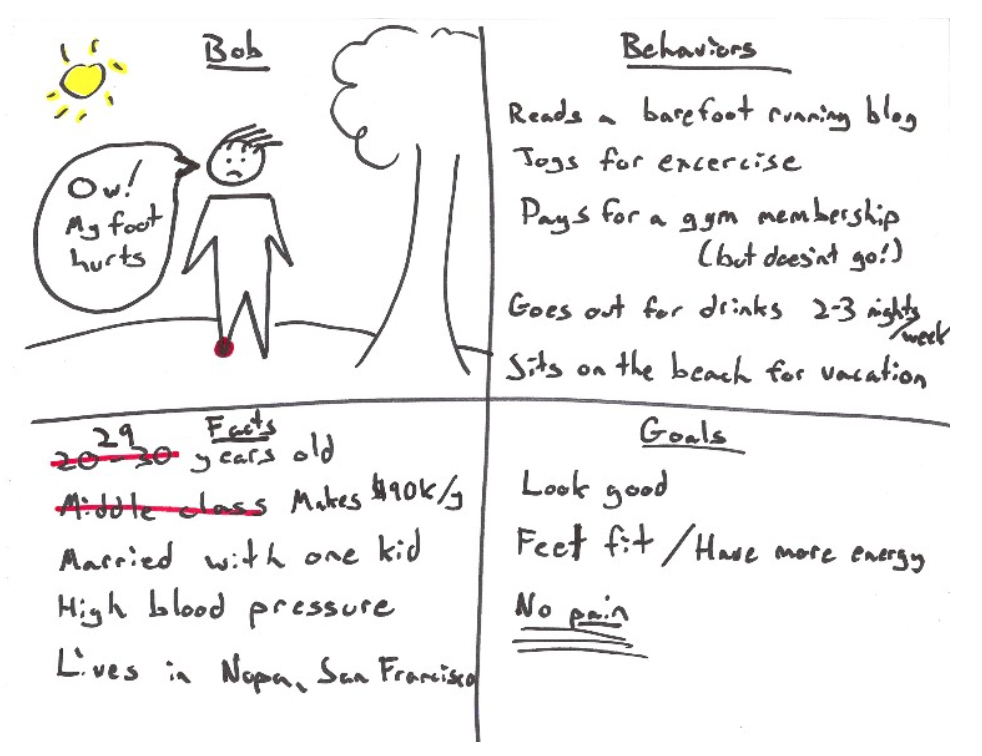
The data points to include in your customer persona are:
- A name for the person and what they look like
- Some behaviors of the person
- Some facts about the person including demographic and psychographic info
- Some goals of the person and the pains they are experiencing
And here is a more detailed buyer persona table:
| Persona #1 |
Persona #2 |
|
|---|---|---|
| 1. Name | ||
| 2. Background information Profession, family status, career path (e.g., employee/freelancer/entrepreneur) | ||
| 3. Basic demographic information Age range, location, gender (if relevant), income range | ||
| 5. Online behavior Favorite social media platforms, shopping preferences, sources of inspiration | ||
| 6. Life goals and dreams What do they hope to achieve or change? | ||
| 7. Challenges and pain points What problems are they trying to solve? What worries them? What is stopping them from achieving their goals? | ||
| 8. Summary How can your product help them achieve their goals and address pain points? |
Step 3: Branding and Messaging
Once you understand your market better, the competing products, and have a good picture of your customers it’s critical that you craft your brand and messaging to align with them in a way that shows you can solve their problem uniquely and that they need to give you a shot.
Before finalizing any marketing content or messaging it’s important to check to make sure it passes through your on-brand filter once you have outlined your brand guidelines. This will ensure that each marketing message stays aligned with your brand and maintains a consistent brand identity.
The main components that make up a brand are the following:
- The company mission and values
- The emotions (usually 3)
- The tone you will speak to them with (based on the emotions)
- The identity (colors, design, logo)
- The companies unique value proposition
Take the time to fill out and create brand guidelines that you can refer back to and use with any of your creative employees so that your marketing content and messaging stays aligned with your brand. Below is a brand guidelines template:
| Brand Elements | Description |
|---|---|
| Brand Purpose | |
| Brand Mission Statement | |
| Unique Value Proposition | |
| Brand Emotions | |
Brand Voice and Tone
|
|
| Tone and Communication Style Used in Content | Blog Posts: Emails: |
| Key Messaging | Tagline or Slogan: Brand Promise: |
| Imagery & Design | Brand Colors: Brand Fonts: Brand Imagery: |
Step 4: Content Creation
Now that you’ve mapped your market, crystallized your personas, and locked in your brand voice, it’s time to craft the actual assets that will move the needle.
Your content isn’t just “stuff to publish”—it’s the bridge between what you know about your audience and what you want them to do. Here’s a simple, four‑phase guide to keep every piece on‑brand, on‑target, and on‑point:
1. Align Your Content to Persona Needs
- Match pain points to content style and format . If your customer persona is struggling with a certain problem or symptoms you need to gear your content and message to this problem in a way that they can take in at their current stage.
- Map the journey. For each persona, think about the stage of the buyer’s journey they are currently in when you are reaching them with your message. This will determine the type of message you create and how you speak to them more specifically to get them to take the next step.
2. Reinforce Your Brand Voice & Messaging
- Voice checklist. Before you hit publish, run your draft through your brand filters: mission, emotions, tone, value proposition in the market.
- Visual consistency. Use your brand colors, fonts, and imagery style in every asset—email header, blog featured image, social graphic—so your audience recognizes you at a glance.
3. Infuse Data & Insight
- Leverage research snippets. Drop a statistic from your market research to underscore urgency—e.g., “78% of buyers in [segment] cite X as their biggest trigger.”
- Persona quotes. Craft micro‑testimonials or “voice of customer” pull‑outs that echo actual language your target uses.
4. Drive to a Clear Next Step
- Single, simple CTA. Every piece—whether it’s an email, ad, or blog—needs one, and only one, call to action that ties back to your campaign goal: “Download the guide,” “Book a call,” “Start your free trial.”
- Channel‑specific tweaks. Tailor your CTA language and placement for each channel. In email, bold it in the footer. On social, embed it in the first sentence of your caption.
Step 5: Tracking Goals & KPIs
When starting and launching any new marketing campaign like an email newsletter or content marketing campaign it’s vital that you determine the main goal of the campaign as well as the key performance indicators you will track to determine how it’s going and if changes need to be made.
In any marketing campaign plan, there are a few key elements:
- Campaign Goals: What business objective are you trying to achieve with the campaign?
- KPIs: How will you measure the success of the campaign? Which data points will show success?
- Desired Actions: What actions do you want potential customers to take?
- Target Audience: Who is your main target audience that you are marketing to?
- Stage in the Buyer’s Journey: Which part of the marketing funnel is the campaign targeting?
- Channels or platforms: Which marketing channel and platform are you using to reach them?
- A Tactic: What are you offering customers that’s unique or adds value to them?
- A Timeline: When are you starting and when is your campaign ending?
Below is a simple table where you can fill out the data:
| Campaign Component | Details |
|---|---|
| Goal | |
| KPIs | |
| Desired Actions | |
| Target Audience | |
| Target Stage in the Lifecycle | |
| Channels and Platforms | |
| Tactic | |
| Timeline | |
| Bonus: Campaign Name |
While some of this information will be determined even before doing market and customer research, it’s important to have it all outlined before you launch any marketing campaign so that you can check in on the analytics on a consistent basis and at the end of the campaign to determine if you met your goals and KPIs.
By analyzing the data during and after the marketing campaign it will allow you to determine the success of the marketing efforts and how you should or should not make changes to keep growing the business.
Conclusion
Every winning campaign starts and ends with these five pillars—Market Research, Customer Personas, Branding & Messaging, Content Creation, and Goals & KPIs—working in concert to turn guesswork into growth.
By following this framework, you’ll speak directly to your ideal customers, reinforce your brand at every touchpoint, and measure your results with clarity.
At Digital Sidekick, we’ve seen firsthand how dialing in these essentials transforms email sends into conversations, clicks into customers, and budgets into measurable ROI. We have a simple and streamlined process to create an email marketing plan that will increase your customer value, drive repeat sales, and generate new referrals for your business.
Get in touch today so that we can grow your revenue by implementing a simple email marketing and newsletter game plan that keeps your brand top of mind and growing!